Friday, 30 June 2017

Rosie - RIP

Seems to me like the only times I write on this blog are when another hen dies.

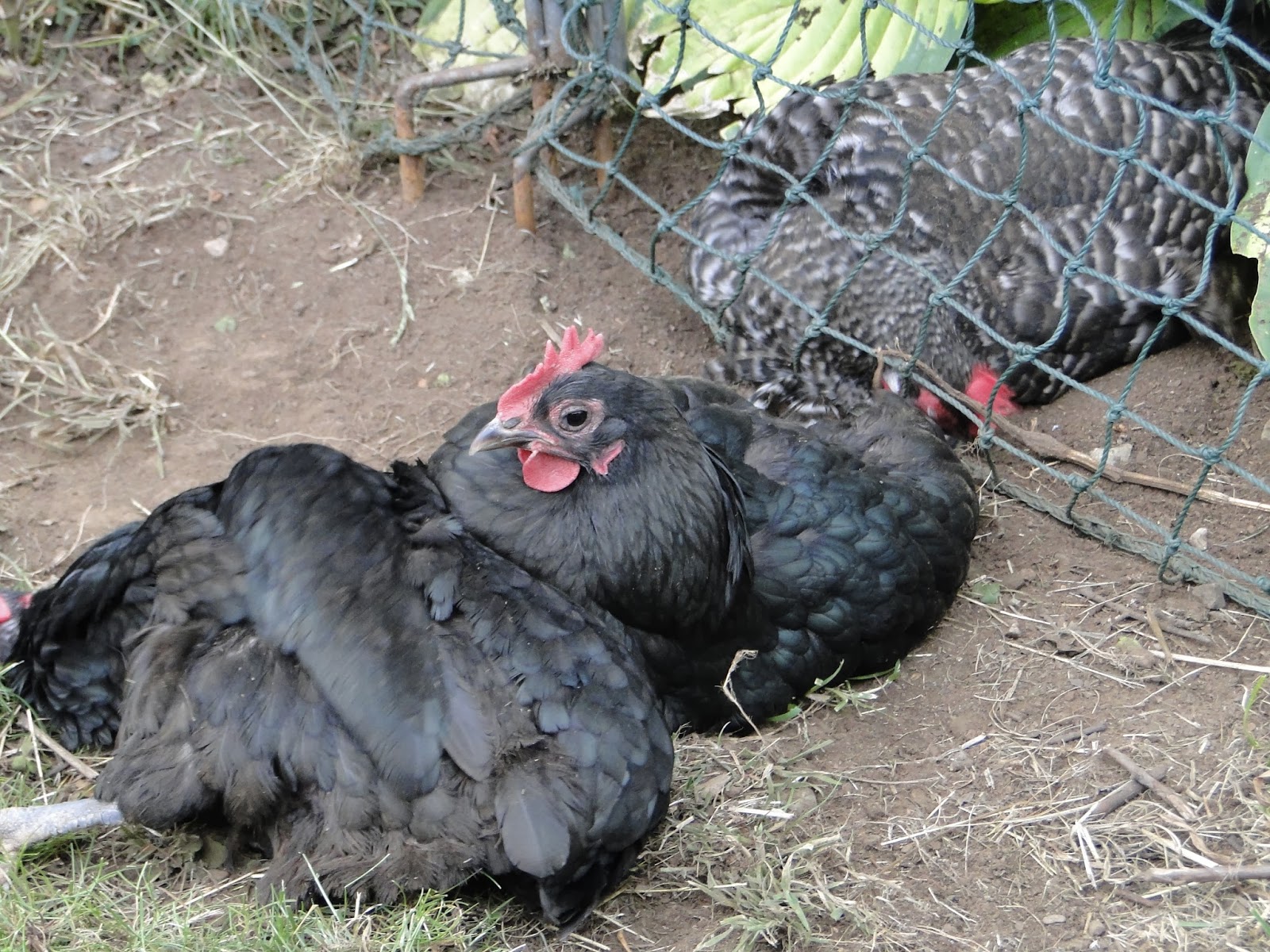
Our wee Rosie died last night.  She had been squeaking when she inhales for about a month or so now and was a bit slower walking around the garden compared to the others.

She was a lovely hen, but a bit of a funny one.  When she first arrived she instantly bonded with the top hen Matilda.  She came to us at the same time as our white hen and they had previously been with a rooster, so we had hoped maybe to get some fertile eggs from them, but it never happened.

Rosie never once slept on the perch! She always slept on the floor near the perched hens.  Funny girl.

Rosie had been the top hen for a while now, ever since Matilda passed away.  I suppose Queenie will be the new top hen now, as she is now the oldest, with Bluey and Sunny following along behind.  She too is a kind hen and not too bossy.

Poor Rosie.  She did have an excellent life with us though!

Friday, 22 May 2015

Our Wee Olive - RIP

Poor wee Olive has died.  She has suffered from scaly leg mites ever since we got her, but apart from the last month it didn't seem to affect her life at all.  We have had her for 1 year and 10 months in our family and she has had a good life here with us.

This past month she has been limping a little and this last week she struggled more with descending the ramp from their home.  She stopped eating yesterday and when I was treating her feet I noticed she was wheezing, so I didn't think she had many days left.  But her death was announced by the head hen Rosie doing some flapping and jumping onto poor Olive to perhaps try to revive her?  Hens can be a bit mean sometimes.

We won't be getting anymore to replace her, so will be content with our family of four hens for now.
That is now our 6th hen to die, and it still breaks my heart, but not for as long as it did at first.  I guess I am getting used to the inevitability of unexplained and sudden illness taking hold of these little darling birds.  I know that they will all die at some stage.  So I get the privilege to find joy from them in our garden every day until then.

Wednesday, 16 April 2014

A Visitor to our Garden

My Mister can be very liberal with the throwing out of seeds to our 5 hens in the mornings.  And this is what I think has prompted some new visitors to drop by.
This is a pheasant, fairly common around these parts, but before we kept hens I'd say that I'd only ever seen them in our garden once before.  This week we have seen three.  The first one had fairly short tail feathers with one bent downwards.  The second one was very noisy and soon jumped up onto the fence when he saw me looking out the window.  But this guy in the photograph, he was still there when I came outside with my camera as he was hopping on a sore leg.

Pheasants really don't want to be near people so he soon flew right up high and over the roof of our house.  This is a male pheasant, the girls are much smaller and very beige and dull coloured.  There are many pheasants around here as the large estate owners like to have their friends up from the city and go game shooting.  So they employ a game keeper on most estates who raise pheasants in the estate woodlands so that there are plenty around for the table.  Unfortunately they are not very smart birds and tend to walk right in front of cars all the time.
I saw a black one when I was driving today, on the side of the road.  I always keep my eye on them as they can be standing so still one second and then they dart right in front of your car the next.  I always honk my horn to try and teach them, just to do my bit to lessen the carnage at this time of year.

My hens didn't go near him, but they didn't seem too afraid either.
Whenever I go into the garden now, or even just look at them out of the window, they all gather towards me.  It is because Mister keeps giving them meal worms by the handful everyday and they are associating seeing one of us with food dropping from the sky.
It is a bad habit that I am going to have to break him of, as their poos are becoming very brown and very smelly from all the meaty worms he is feeding them, and of course it is me and not him who cleans out the hen house every week!
Here is my favourite photo taken this week, it's Bluebell.  Australorps have the loveliest eyes.

Tuesday, 18 March 2014

Integrating two new hens into a small flock

After the death of our second-in-command Scots Dumpy hen, we were down to three Australorps: Rosie, Queenie and Olive.  We decided to get two hens to replace her, as introducing just one hen without a companion would be very stressful and would make her an outsider and a victim for a very long time.

Before we went to collect two new bantam Australorps, we prepared the 'wee hoose' for our new arrivals.  This is a small guinea pig house from a pet store that we store flat packed into our shed.  We also set up a caged area within visual distance of our hen house.  I kitted it all out with clean bedding, a perch, waterer and feeder.  It rained a lot during the first week of the new hens being here so we also put some corrugated plastic sheeting over the cage to provide extra shelter.
the wee hoose

We left our two new girls in this wee hoose for a week.  The first night, our top hen Rosie was squawking and marching around the yard.  We think she was calling to the new girls to hurry up and come inside the big house, so sweet of her to be marshalling the troops before the impending dusk!  That only happened the first night, from then on the other three hens would come over and see the new girls whenever they wanted to, but unfortunately it rained a lot that week, so they only came over when we sprinkled the wheat seeds near the cage in the evenings.
the wee hoose with the big house in the background
I used this first week to get them used to feeding from my hand through the cage.  Bluebell was the more confident one and started taking meal worms from my hand on day two.  Sunny took about five days to get used to my hand coming into the caged area.  I used this opportunity to put coloured rings onto their legs.  Sunny's legs were too big for the yellow ring so she got an orange one instead.  Bluebell now has a blue ring.
Sunny on the left and Bluebell on the right

After that first week, we then opened up the cage and let the new hens come out into the garden with adult supervision for a couple of afternoons.  This was really to watch out for any potential violent behaviour from our three established hens.  Once we could see that our older girls are really only interested in seeing the two new young girls off, and chasing them away, so that they can be by themselves, we then let them have free wander of the garden all day with the others.  We always leave the cage open though in case they need to retreat.  The new girls were laying eggs happily inside the wee hoose too.  But every night they have tottled back to the wee hoose to sleep and have only shown curiosity in the big house when the other three are far away.
L-R: Olive, Queenie and Rosie, staying far away up the other end of the garden
After one week of cage living then one week of integrated daytime, I decided it was time to start introducing them to the big house for sleeping.  Once it was dark I went out and scooped up one hen and placed her on the perch in the big house, followed quickly by collecting the other one.  On the second night I collected one hen and when I turned around Sunny was heading over to me, not wanting to be parted from her friend.  So I herded her into the run at the bottom of the big house and locked her in.  She made her way up the ramp and I closed the pop door, then reached in and settled her onto the perch.  On the third night I herded them both into the run area and they went up the ramp themselves.  And at last, from then on they went to bed with the older ladies every night.
I still need to reach in and put Sunny up on the perch sometimes, but this could be because they've gone to bed and it is still light enough for the others to see her.  Sunny is at the bottom of the pecking order and so possibly they are making her wary so she stays on the floor of the house.

All in all, 2 and a half weeks later and my hens are a flock of 3 and 2 and just sometimes a flock of 5.

Here is a little video of them, demonstrating that the three older hens chase the two new, younger hens away.


Friday, 21 February 2014

Colours to tell them all Apart!

We now have three hens that are all black bantam Australorps and it can be difficult to tell them apart from a distance.  It is easy when we're outside with them, as Olive is the smallest and has scaly, lumpy legs.  Queenie is the largest and has an unusual pronged part to her comb, and Rosie is the most confident and always seems to be around us.
The trouble is being able to tell who is who from a distance, knowing who is all by themselves, missing or who comes down the ramp last in the mornings.  So we've put coloured rings on their legs.
Rosie has a red ring - rosy red makes sense
Little Olive has a pink ring - wee baby girl pink


Queenie has a purple ring - purple is an ancient regal colour
Our two new Australorps will arrive on Sunday, and they will be getting a coloured ring too, I've ordered a multipack of assorted rings online.  Thinking up new names that are linked to colours should make name choosing much easier -
Yellow = Daisy, Sunny, Gloria,
Blue = Bluebell, Sky,
Orange = Marigold, Amber,
Brown = Bronwyn,
Green = Verde, Ivy,

Please share if you have any ideas - I'd love some help!

Thursday, 20 February 2014

Can't believe it's another death in our garden

Just when you think everything is going swimmingly, another surprise is in store.
Our longest lasting hen who has been with us for three winters, Bizzy Lizzy our Scots Dumpy came down from the hen house last week with one eye closed.

Two days later she was hunched down and then the next day she couldn't walk on her right leg and was barely able to limp.

You can see her limp leg poking backwards in this photo.
We kept an eye on her over the weekend and helped her to food, water as well as in and out of the house, and took her to the vets on Monday.  They ruled out an injury and suspect it to be something neurological.

She was given two steroid injections and a 5 day course of antibiotics.  Over the five days she did show some signs of improvement.  She seemed to want to stay with the other hens, and she was able to use her leg a lot more, swinging it forward and walking more smoothly although not putting actual weight on it.  Her eye opened up, but she doesn't seem to have any control over the lower lid.  Towards the end of the 5 days on antibiotics she deteriorated and so on our final trip to the vet we had to say goodbye.
Her other lower lid no longer seemed to close and there was no evidence of her being able to open her beak by herself and when she did aim for a seed she missed it by an inch anyway.  Her comb had dropped to one side, and her head and neck were always tilted to one side.

It was sad to say goodbye and I shed some discreet tears in the vets, but it was for the best.  Her condition was advancing despite the medication.  The vet doesn't think it is the sort of thing that the others will catch, most likely an infection that got into her nervous system.  She must have been in pain and discomfort so I am glad that she no longer has any pain.
Her better eye.  Walking a bit better, although limp leg is
still towards the back and not carrying any weight.

She did have a good life here with us, despite being our bossiest, broodiest, flightiest and least tame hen.  Thanks for all your naughtiness Bizzy Lizzy, you taught us a lot about the various natures of hens.
Bizzy Lizzy, Scots Dumpy, in better days

And so, another phone call to the breeders of our two newest hens, and we're off to collect two more Australorps on Sunday!  We'll have 5 hens at one time - the most we've ever housed!

Monday, 10 February 2014

Integration Process is Complete

Our two new girls Queenie and Olive have names!  One because she's a big lady for a bantam, and she is the only hen we've ever had who has had the chance to be a mother.  The breeder we bought them from said she had hatched and mothered 10 chicks.  Olive is so named because she is small and black.
We have let them out together with Rosie and Bizzy Lizzy quite a bit the last few days and have opened up both their wee house and the big house in the evening so that they could choose where they felt comfortable sleeping - and both Queenie and Olive, after attempting to fly up into a tree, followed the other two into the big house!  Yay!  

So that is the slow integration period now officially over.  We'll let them all sleep together and spend the days together but will leave the wee house available for another week, just in case they need somewhere as a retreat.

Thursday, 6 February 2014

Integrating New Hens

Our two new hens seem to be enjoying their new surroundings here with us, and our other two hens are showing signs of getting used to the new girls being here.  They still don't seem to know to go inside at night time, so I've had to use a long stick to corral them into the wee house.  And there is still a lot of squawking in the mornings.  I think I will try to make the wee house a bit darker.
The other day we caught the new girls taking a dust bath and then Bizzy Lizzy our flighty hen went over and had a dust right beside them!  She is usually a pretty antisocial bird, so perhaps the netting fence that separated them gave her some confidence.
 

It has rained a lot lately, so with a bit of a dry spell I decided to open up the netted area and see how they get on mingling together in the garden.  We sprinkled lots of seeds and meal worms to keep them occupied.
Bizzy Lizzy was surprisingly unfussed by them but Rosie seemed to act a bit like a sheep dog, going up behind them and trying to divide them to get one alone to chase and peck, then circles back to chase the other one.  So we don't think they're quite ready to live together at the moment.

We have decided to call the larger of the new girls Queenie, now just to come up with one more name.

Wednesday, 29 January 2014

The New Hens and Eggs in Winter!

Our two new hens have been settling into their new environment fairly well.  They've been pecking at their house door in the mornings, eager to get out and enjoy the day.  We can hear it from our bedroom window so I've been getting up early to let them out so as to give them a gentle and calm way to start their day.  I wouldn't want them to become anxious.  It has been really wet and miserable for their first days at our house, so I put a large piece of chipboard over the top of their cage to provide a little shelter, but they spend all their days out under the rain, I haven't spotted them using the shelter at all.
Our other two hens, Rosie and Bizzy Lizzy have been doing a lot of squawking at the new girls in their caged area.  Bizzy Lizzy is a flighty hen (she's a Scots Dumpy) and has been doing some new alarm call noises that we've not heard before.  And yet she seems to spend a lot of time near the new girls cage anyway?
Rosie is keeping her distance but as she is already laying eggs again, perhaps it is just that she wants to stay near her house.  I have even resorted to keeping her in the house with a rubber egg to remind her of what her body wants to do and where it needs to be done.  Last summer we had to hunt for eggs hidden around the garden in mystery nesting spaces, and we don't want to go through that again!
The littlest of the new hens laid her first egg for us today - and it is much darker than any of the other Australorp eggs we've ever had.  It is smaller too.  Eggs still amaze me!  Like little gifts from our dear pets.
Eggs from Left to Right:
Rosie - Australorp x2 eggs, new bigger Australorp lays a light brown egg, new smaller Australorp lays a little brown egg, Bizzy Lizzy - Scots Dumpy, a shiny white egg.

Thursday, 23 January 2014

News - Some Sad and Some Happy

Our darling little white hen has been an excellent patient these last few months, every second or third day I've have cleaned her scabby wound, but sadly she has now died.  Last week whilst cleaning her tail I was finally able to remove the huge scab.  Once wet it came away quite easily, apart from two feathers that were still attached to both her and the scab.  I think that when I pulled the scab away and these two feathers were plucked out too, that the shaft hole that was left behind allowed a pathway for the puss that her tail was so swollen with, to finally get inside her blood stream.  Upon removing the scab her flesh was so tight and red and you could see she had some large swollen yellowness underneath the skin.  Her comb and wattle went very pale, so I kept her warm inside until her feathers dried.

I wish I had taken her straight to the vet once the scab was off, but we were just so happy that she was finally back to some sort of normality, that I didn't think it was necessary at the time.  Apart from the swollen tail and pale comb she looked so much better.
Two days later she was back outside with the others, and when we came home we couldn't find her at first, but after a quick search we found her passed away, hiding under some foliage.

RIP Whitey Didee

Nursing our little Whitey Didee has been one of my favourite experiences since keeping hens.  She became so tame and seemed to enjoy being petted and picked up.  I got to see her close up and got used to feeling a hen's body quite intimately.

So Now for Some Happy News

Being down to only two hens didn't seem right to us, the hen house is really too big for them to stay warm with only two bodies to cosy up with, and I have never been able to get Rosie to sit on a perch, so poor Bizzy Lizzy was sleeping on the perch all by herself.
We went on holiday for two weeks and took our hens to a hen hotel in Fife, Scotland, and asked the breeder if she had any bantams available that she could introduce to our little flock of two, and then we'd be able to bring four hens home.  Unfortunately she had two but wasn't sure if they would turn out to be roosters, and by the time we came home from holiday she was sure they'd be roosters, so we brought our two little girls home and tried another avenue.  I am a member of the UK Australorp breed club and we receive a booklet every year that includes breeders details, so we found a couple that live about an hour away and arranged to buy two new black Australorp bantams from them.  They are 2012 Spring hatches.
Scaly leg girl on the left, big girl with unusual comb on the right

One has an imperfect comb, with two prongs quite close together and she is too big to be called a Show-perfect bantam, and she is the only one of our hens who has ever sat on eggs and hatched out chicks - apparently she was a Mum to 10 chicks!  At the moment her feathers are still missing from her tummy and her rear feathers are also plucked - they do this to make it easier for the rooster - but they'll grow back.
The other hen they gave us is small and has had a wire brush applied to one of her feet - she must have scaly leg mite - I really don't want to introduce a new illness to my garden, but we didn't really get offered our pick, as they seem to breed for showing and were giving us the ones that they couldn't use, and I guess she'd probably get put down if we didn't take her.  Apart from her sore feet, she looks just lovely!  We bought some vaseline on the way home and I already have some scaly leg mite spray at home so I've started treating her already.

We brought them home and are keeping them isolated for their first week.  I've doused them with mite powder and set up the wee house and cage to keep them in view of the others but separate.   Both Rosie and Bizzy Lizzy had a face-off up against the netting on the first day.  At night our new girls didn't seem to realise what the wee house was for and instead snuggled up with each other next to the waterer outside, poor wee things.  So we picked them up and popped them into the wee wooden house and closed the door.

Now to start thinking of names!

Monday, 11 November 2013

Autumn Sunshine

We have had some crisp and frosty mornings here lately, with the sun no longer reaching to the top of the sky, but the Autumn time is just beautiful and well worth the colder and darker days.
Poor Whitey Didee doesn't seem to get a lot of sun in her isolated pen area, so when I have some time I have locked the others into their run and allowed Didee out on her own to get some sun on her back.

She was sitting on the edge of our thigh-high veg box and suddenly flew up onto my bust!!!  It was so sudden and so funny - she just stayed there, looking at me and then looking at my Mister!
Then she climbed up onto my shoulder to imitate a pirate's parrot!

She had done a bit of preening today and again picked off a bit of scab and was bleeding.  I was able to clear a bit of scab off too and even cleared an exit hole the puss, which has to be good.  We tried to take a photo but this was as far as we got before she flew out of my hands.
Didee is such a tame and fun little bird.  Helping her to get better with now every-second-day cleaning has really made us close and helped me to get to know chickens so much better.  She has taught me a lot and I am so much more confident as a hen keeper.

Saturday, 26 October 2013

Hen's Day Out

We still have our white hen Didee in an isolation pen so that the other two won't peck at her and so far it seems to be going well.  On Friday the sun was shining so I let her out for a while with the others, thinking that they'd all be so happy in the warmth that they would leave each other alone.  I was wrong.  When I brought her inside at the end of the day for her daily antiseptic wound-cleaning there was a new bit of the wound that had been pecked... it is such a shame.  I can't risk it again as I want her wound to heal up, so I will have to just keep her on her own and not feel too sorry for her.  It really is for her own good.
At least the wound wasn't oozing any puss, but there are a lot of red/black scabs unfortunately.

As for the other hens, they are gobbling up the seeds that we give them and not really eating any of the layers pellets, so we shall have to stop giving them seeds I think.  The pellets are specifically designed to give them all the nutrients they need so we must do all that we can to encourage them to eat these.

Sunday, 13 October 2013

The Moult Continues

I tried to take photos of my very busy and always moving Scots Dumpy hen, Bizzy Lizzy.  Last week I got photos of the other two girls but Bizzy Lizzy just wouldn't stay still.  But this week I have succeeded!


She looks so funny without her tall tail feathers!

Saturday, 5 October 2013

Chicken Bunting Quilt

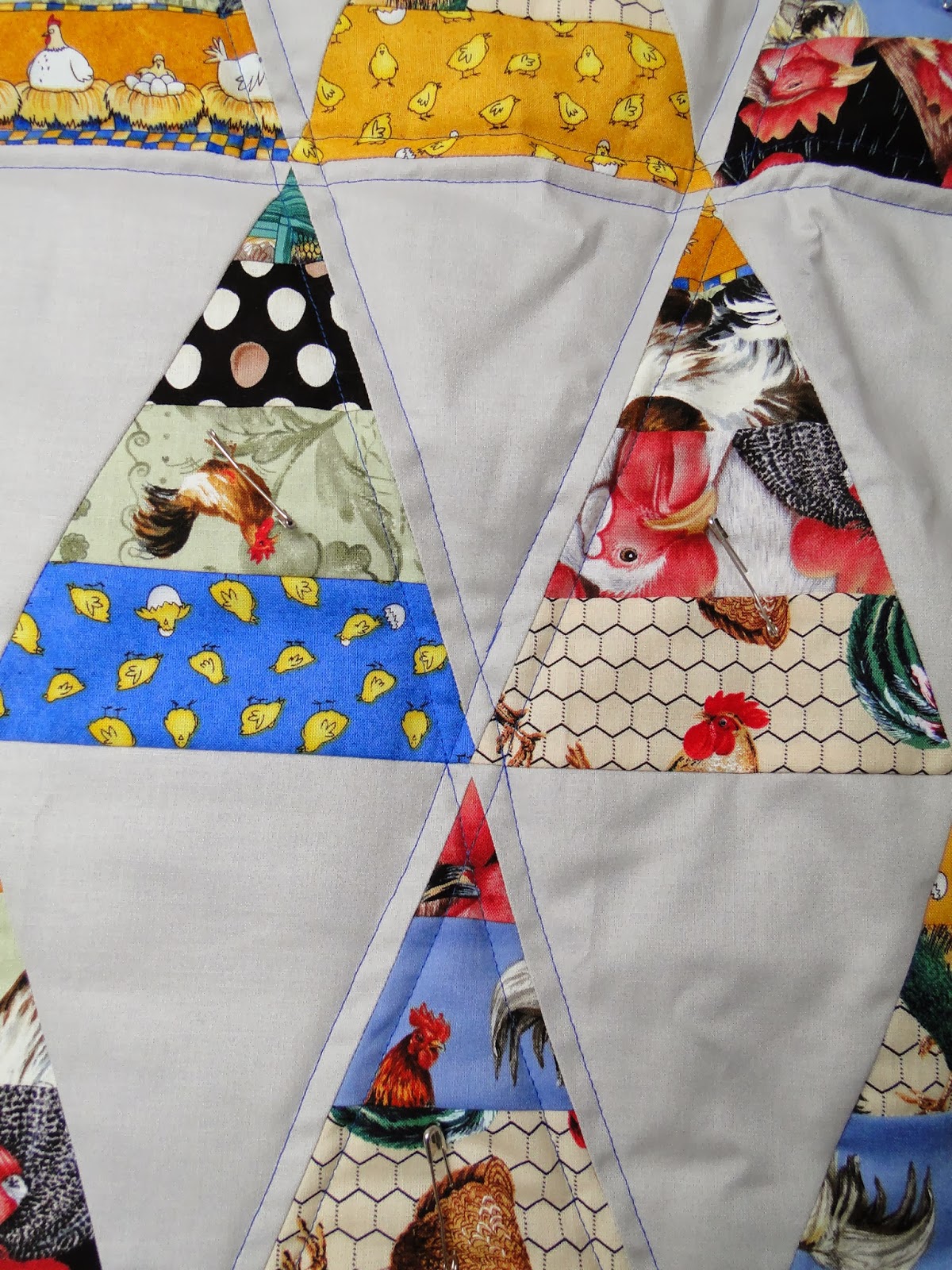
I do a bit of sewing and quilting in my spare time.  Last year I bought a bundle of chicken themed fabrics from ebay without any sort of plan as to how I would use them.  This year I went to a sewing and quilting workshop day and one of the classes I took required a bundle of various fabric strips, so I was all set to create this:
Moulting Rosie admiring my chicken bunting quilt.
I am going to use this as a lap quilt for those days when I just need a little something to keep me snuggly.  I know it isn't the most attractive or beautiful quilt, but the fabrics do make me smile when I look at it.  The pattern has been featured in Creative Quilting magazine here in the UK and the author Fiona is the person who took us for this workshop.  If you click here you can see just how lovely her original quilt is.


Construction

First I cut the fabric into 2.5" strips and sewed them together in rows of 4.  If I were to make a bed quilt then rows of 5 would be more visually pleasing.

Using thin cardboard from a cereal box I cut out a triangle that was the same height as my sewn and pressed together strips.  The top angle of the triangle is 40 degrees and the base of the triangle has two 70 degree angles.

Laying the cardboard triangle - template - onto the strip sets I used my rotary cutter to cut out all the triangles.  I then cut some plain grey fabric into wide strips that matched the height of my strips and the triangle template and cut them into triangles too.

Then I sewed them together side-by-side.

Then once I had a collection of these I sewed lay them out to make sure I didn't have too many similar triangles near one another then started sewing them into rows, and then sewing the rows together.

Lastly I stitched the three quilt layers together using straight stitching about 1cm inside each triangle.  
the back

I didn't buy enough backing fabric for my quilt so had to do a bit of "cut and paste" but it looks okay and I quite like the solitary hen in the corner.
Hope you like my little chicken bunting quilt!
I still have some chicken fabric left over, so if you know of any other projects I could make, please share the link with me!

Saturday, 28 September 2013

Autumn update

Everyone has gone off their lay now as Autumn is setting in.
Rosie our bantam Australorp is our top hen but she still refuses to sleep on the perch and prefers nestling into the shavings on the floor of the house.  The last few nights I have seen her settling down for the night inside the nest box - a behaviour I don't want to encourage, so I have blocked the nest boxes up for now and will leave it like that until they start laying again.
It seems strange that she doesn't want to be up higher than the others.  It is also a bit of a shame, as Bizzy Lizzy our Scots Dumpy has lately taken to pecking at the feet of the other hens so that they jump off the perch and tries to have the whole thing all to herself.  Once it is dark I go back out and pop Whitey Didee back onto the perch - by that time it is too dark for B.Lizzy to defend anything.  I've even seen her sharpening her beak on the concrete - much like a carving knife is sharpened before ...eek.  When she pecks food out of my hand it always hurts but no blood has been drawn - so far.
We are still keeping an eye on Whitey Didee.  I let her sleep with the others at night but in the day she gets put into the isolation area so that the other two can't peck at her wound.  I do let her out with the others but only if I am out there, and I use a long bamboo stick to hover over her tail so that the other two are deterred from showing any interest.  She does seem to be knocking off some scab every day with her preening, which just causes bleeding.  The vet has said the next step could be a bucket collar but at the moment we are just trying to keep her clean and not bored.

Everyone is moulting at the moment, and it is so funny!

Balding Rosie

Whitey Didee, all scruffy and bald
Sorry, no photos of B.Lizzy as every one that I took of her she was moving and they turned out blurry.  She has lost all her tall tail feathers and now looks really stumpy.  There are a lot of her stripey feathers around but you can't see any bald patches on her at all.

Monday, 23 September 2013

Our hen has died

But it isn't the one you would think!  Our lovely Australorp hen Matilda has passed away.
After she came out of her broody state, she seemed happy enough to be the second hen.  But within a couple of weeks we noticed that she was doing some strange head rolling. At first she seemed to roll her head when she first entered the hen house or if I shone a torch into the house at night, so I thought it may be something to do with the change of light to dark that triggered her behaviour.   Then I thought it may be wry neck so was giving her water additives for strength. (Polyvisol Enfamil, vitamin E with selenium)
After a month the head rolling behaviour turned into complete fits.  She would flap and flail around in the house going backwards and stumbling around in circles.  One morning as she was about to come down the ramp she took a fit and rolled down the ramp.  I could pick her up and gently stroke her neck and it did seem to settle her quickly.  One evening I was peeking at them through their window so that I wouldn't disturb them and all of a sudden without any warning or reason Matilda flapped and flailed around in circles on the floor of their coop out of control.  I googled this condition but came up with nothing apart from electrolytes added to their water. (electrolytes are recommended for epilepsy)
We really hoped that these fits were related to an injury of some sort and that they would soon pass.  We were also intensely looking after our white hen Didee, so the sudden change from head rolling to full fits has shocked us.
After a few of these fits Matilda soon became demoted to third in the pecking order.  Due to all the flailing inside the coop her primary wing feathers gradually broke off and some of her other feathers were jutting out at odd angles - indicating a lack of grooming.  

She looked very sorry for herself with a shrunken comb and hunched down, although she always stayed with the other hens and was keen to be a part of normal foraging and scratching routines.
Matilda, top left, still part of the gang

The hen house is reasonably close to our bedroom window and one night we could hear her flailing around.  She had four fits that night which is just too many to be considered something that will soon pass, so I took her to the vets the next day.
The vet checked her over and found a small egg stuck inside her, but as the surgery was busy said she'd try to get it out after the others had all left and would phone us to collect her.  We did get a phone call but the vet said that the egg was impossible to remove and was obviously causing Matilda a lot of pain.  Along with the mysterious fits that the vet couldn't account for, the vet suggested she wasn't having a very enjoyable life and suggested putting her to sleep.  So we agreed.  We never saw our darling Matilda again.
Matilda in good times

She was a loving and kind top-hen.  Always personable and interested in her humans.  She will be greatly missed.

Saturday, 7 September 2013

Hen wounds and Isolation

Our white hen Didee has been given more antibiotics - 0.4mls daily - to help her with her wound and we are still cleaning it daily.  At the last visit to the vets they removed the entire scab - underneath her skin is very swollen and puss is trying to get out through 3 of the holes normally reserved for feathers to grow through.  Poor thing.  Whilst she had no scab protecting her the smallest peck caused a lot of bleeding.  She seems to mostly do it to herself when she is trying to preen.  So it seems it is my full time job to keep her from bleeding and attracting the others.

And then to make matters worse, Bizzy Lizzy our Scots Dumpy pecked Didee in the comb and there were blood drops splattered all over the walls inside their house - possibly splattered as Didee shook her head.  But it was a right mess - so poor Didee had to have yet another bath.  But as this isn't as gross we took a couple of photos.

During the week I noticed a lot of blood drops on their house ramp, as I was walking over to them I noticed she had a lot of blood near her tail and then horror of horrors - our top hen Rosie went for her and took away a large amount of scab in her beak!  Now the other hens know all about her wound and her tail is the source of much interest.  I took her to the vet and despite the swelling having gone down it seems that Rosie took a chunk of flesh off her as well as the scab and so now she not only has her original infected wound but a newly dug-out wound to contend with.  So we won't be using that smelly anit-pecking spray anymore as it did not deter them for very long.

So now it's more antibiotics and an isolation house.  We put her in a cat basket in our house that first night and bought a new outdoor house the next day.  We already had this metal cage when we first got our hens but it was stacked away in a shed - glad it has come in handy again.  That first night in the house she was very droopy and kept shutting her eyes.  I really want to help her fight these troubles.  She is such a lovely hen.

Thursday, 22 August 2013

Holiday Souvenir

Recently we went on holiday and had a lovely relaxing time.  Whilst we were away we put our cats into a cattery and our hens into a hen hotel.  It was a lovely place.  They had their own run and house underneath an apple tree.  On the day we went to collect them I phone first to let her know we were on our way when I was told that she had seen blood drops in their house this morning.  After inspecting the birds she discovered a big scab on our white hen's tail that had been knocked!
She didn't have any sores on her at all when we sent them there, so possibly she had been pecked out of boredom in their holiday hen enclosure.  She had put some wound powder onto the scab but we decided to take her to the vets that day on our way home just to get her checked out.  The vet gave us antibiotics to administer down her beak for the next 5 days and advised us not to use any more of the wound powder, so that she'd be better able to see the wound next time we came in.
We kept her with the others in the back yard as usual and sprayed her tail with a brown smelly anti-peck spray.  We took her back to the vet after the 5 days and this time they cleaned her wound with an antiseptic wash and picked off the scab.  Didee was to have a further 10 day course of double-dose antibiotics and I was to clean her wound every day with the antiseptic wash.
Our cat Mr Bingley looking at Whitey Didee with her new anti-peck tail and Rosie through the window

Now that the scab is gone you can see the sore - I won't take photos as it is very gross.  A mound has swollen up near her preen gland, about the size of a good apricot.  It is a bit pussey and bloody and the feathers are trying to grow right through it and around it.  Her preen gland is swollen and pink too.  Having it cleaned and touched seems to hurt her a bit so I have to be very gentle and she really doesn't like taking the medicine.  I hold her firmly around the body and the head whilst my Mister administers the drops down her beak with a syringe, trying to get it to go down the right tract!  We have taken to giving her meal worms afterwards as a reward for her daily sessions and she does relish that part of the ordeal.
When I go outside she used to be so easy to pick up but now she seems to hide from me, she must be associating the catch and cuddle with the trauma of medicine and wound cleaning.